

Losing MAGA
For a decade, the American right was the one pillar of Israel's support that never wobbled. This week, from the White House podium, the Vice President started pulling it down.

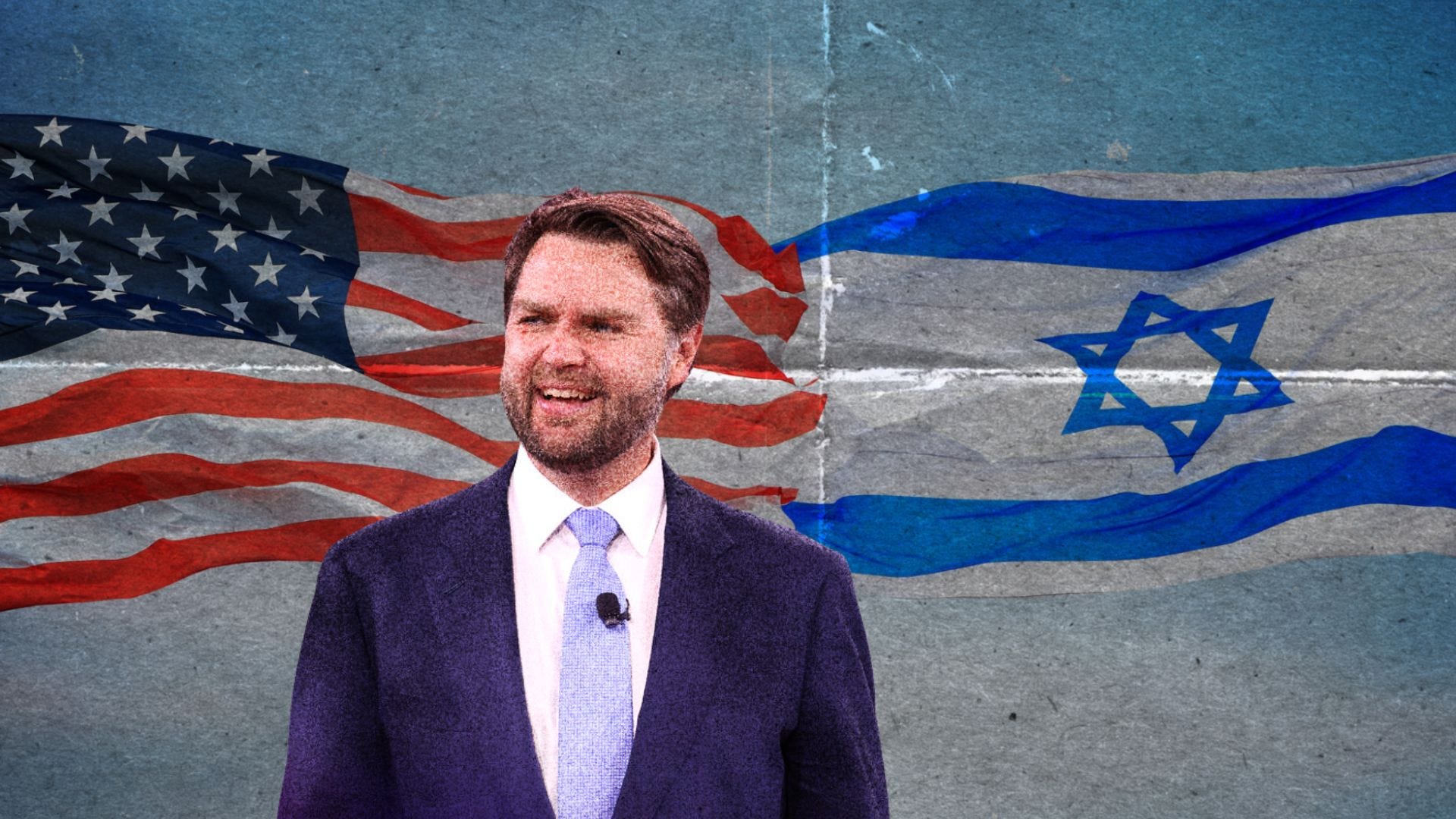
At the White House podium this week, JD Vance offered Israel’s cabinet some unsolicited advice. In their position, he said, he might think twice before attacking the only powerful ally he had left. Two-thirds of the weapons protecting the Israeli homeland, he noted, were built and paid for by Americans. The problem for Israel was not Donald Trump, and anyone in Jerusalem who believed otherwise needed to wake up to their country’s reality. The problem was the Vice President and what he represented.
He had warmed up to this a day earlier. Asked by the New York Times about Itamar Ben-Gvir and Bezalel Smotrich and their fury at the administration’s emerging Iran deal, Vance was almost bored. What, exactly, was their proposal? “You’re a country of nine million people,” he said. “You can’t just kill your way out of solving every single national security problem that you have.” Ben-Gvir shot back that Israel is “not a banana republic.” It was not the comeback of a man winning the argument.
The easy way to read this is as one more chapter in the souring of Trump and Netanyahu. Trump has called Netanyahu “fucking crazy” and reminded the world that “we’re the big partner, and he’s the very small partner.” The relationship was always a marriage of convenience; Trump moved the embassy “for the evangelicals,” by his own account, and wound the war down over Israel’s objections once it stopped paying dividends. Personal, transactional, and very Trump.
But Vance is the one who represents where the party is heading. If the rupture were simply Trump’s vanity, it would end when Trump does. Vance is a different signal: thirty years younger, the heir apparent, and doing what Trump never dared, standing up to Israel and calling out its government directly. That instinct is a worldview, and the worldview is the future of the Republican Party.
That worldview has a name its followers are proud of, America First, and taken to its conclusion it has no seat reserved for Israel. Vance likes to tell of a Ukrainian-American who pressed him on Kyiv, to whom he replied that if you are an American, your country is the United States. The same logic does not stop with Israel for Vance; it intensifies. For a decade, the American right’s support for Israel was treated as a sure thing, when all along it was a coalition, and coalitions change.
After nearly three years of war in Gaza, public opinion of Israel slowly declined, but the latest Iran war really exposed it, because it brought America into the fight. Across much of the United States, including among the MAGA base, the war was seen as Netanyahu pushing Trump into a regime-change campaign that failed. The movement that elected Trump to end other people’s wars was asked to own one, and large parts of it refused. Tucker Carlson called it Israel’s war, not America’s. Joe Kent resigned from the administration rather than defend it, citing the influence of Israel and its lobby. These may be moves on the margins, but the discipline of Trump’s first year has cracked, and the crack runs through the people who will define the right after him.
It would be easy here, and wrong, to dress this up as the old right-wing antisemitism in a new suit. The antisemitism here is real. Candace Owens calls Israelis demonic. Nick Fuentes, a Holocaust denier, says his war against Israel is the only thing keeping him going. Carlson platforms them and increasingly claims Israel secretly runs the United States. And yes, Vance is friendlier to that crowd than Trump was. But to file him in the same drawer is to misread the threat. His case does not depend on Jews being sinister; it rests on the claim that American power should serve American interests, which makes an ally who torches your deal with your weapons a strain on the arrangement. That argument needs no antisemite or antizionist to carry it, and that makes it durable, and more dangerous.
The base hasn’t all followed. A recent Pew poll shows a majority of Republicans still backed Trump’s handling of the war, with approval running to 84 percent among those sixty-five and older and 49 among those under thirty. But Pew’s read on Israel itself is starker: 57 percent of Republicans under fifty now view Israel unfavorably, against barely a quarter of those over fifty. That gap opened before the Iran war. Unfavorable views among younger Republicans had already climbed from 35 percent in 2022 to 50 by 2025. The war revealed a generational divide: the Republicans raised on the Cold War and the war on terror still all in, the younger ones who grew up in the aftermath of Iraq and Afghanistan walking away. Those young Republicans will define the party within a decade, and the hawkish evangelical core that anchored Christian Zionism is aging out.
The obvious exception here is Marco Rubio. The Secretary of State is proof that the old pro-Israel Republican remains relevant and influential. But watch what Rubio actually did. He doubted this deal, alongside the defense secretary and the CIA director, and he is nonetheless the cabinet officer now carrying out the diplomacy it set in motion. Rubio did not break with the America First turn; he is administering it. His doubts changed nothing. The Vance wing won the policy, and Rubio is the one now selling it.
A faction whose strongest figure ends a war running a deal he distrusted is adapting to the party’s direction. None of this means the fight for the GOP is over. If Rubio, or someone like him, beats Vance to the 2028 nomination, the old consensus gets a reprieve, but likely the kind Biden gave the Democrats: a last pro-Israel president, not the first of a new line.
Whether the Iran deal is any good is a question for another piece. I think it’s worth noting the size of what the American right just shrugged off: an agreement that leaves Iran’s missiles intact, which Trump waved off by asking why Iran shouldn’t have them when Saudi Arabia does. It also says nothing binding on its enriched uranium, opens the door to sanctions relief, and constrains Israel against Hezbollah in Lebanon. These are not minor grievances, and the striking part is how comfortably they were waved away, and by whom. Nuclear negotiations are scheduled to take place in the coming months, but it seems the US is checked out either way.
Which returns us to the bet. When Netanyahu went all in on the GOP, starting with his 2015 address to Congress against Obama’s Iran deal, he wagered the Republicans would stay on Israel’s side for good and paid for it by writing off the Democratic half of the country. The bill on that is already arriving: a deep-blue, heavily Jewish New York district is about to send Brad Lander to Congress over a sitting Zionist incumbent, in part because Lander ran to his left on Israel. The progressive door is closing, slowly and then all at once. And now the door everyone in Jerusalem assumed would stay open forever has a draft running through it.
In 2019, Netanyahu draped buildings in Tel Aviv with banners of himself shaking Trump’s hand, captioned “Liga Acheret (Another League),” as though the friendship were a platform unto itself. What I remember from those signs is that Netanyahu seemed taller than usual. He was photoshopped equal to Trump’s height. Just this month, with elections fast approaching, Netanyahu’s Likud quietly shelved an ad campaign built on that same relationship, having concluded it would no longer move a vote.
A pro-Israel center that once stretched comfortably across both parties is now pressed from the progressive left and, increasingly, from the nationalist America First right, and the middle keeps shrinking.
But what makes the squeeze so hard to escape is that the two sides are pulling away for opposite reasons. The Democrats who are drifting still care what Israel does; their issues run through Gaza, the settlements, the ministers, the war, which means a different government on a different path could slow the drift and perhaps reverse part of it. That door is conditional.
The MAGA door is not the same. The America First objection has little to do with how Israel behaves and everything to do with why this is America’s problem at all. A new prime minister, a quieter cabinet, a war called off a month sooner, none of it answers the question Vance asked from the podium. The left is leaving over what Israel does, the right over what America has become, and no single concession speaks to both. Israel can still choose a path that wins back one door. The other is closing on a logic of its own, and there is no Israeli choice that holds it open.
I’ve told my Israeli friends for years that Bibi’s strategy of only courting Republicans would be a disaster. They’re panicking now and I don’t want to gloat, but…
This is exactly right. And also illustrates the 2 reasons that the American Israeli alliance was formed. Democrats supported Israel based on a perceived shared moral and ethical commitment. Republicans based on utility, first against Communism then against Islamism. Now Democrats view Israel as immoral and Republicans view Israel as no longer useful.
The Israeli Far Right vision, maximalist and contemptuous of International Law, preferred the Law of the Jungle. But only the biggest or most numerous can be the strongest in the Jungle. Israel, by it's nature can never be either. And only the strongest survive in a world ruled by such Law.